That busted Corolla in the driveway isn’t getting any prettier. Between the Texas heat, the HOA letters, and the tow truck you keep meaning to call, a dead car costs you money every month. The good news: you can sell a junk car in Austin in a day or two, and you don’t need to be a mechanic or a haggler to do it right.
To sell a junk car in Texas, follow these seven steps:
- Find your title. Texas requires the title in your name to transfer ownership.
- Figure out what the car is worth. Weight, condition, and the catalytic converter drive the price.
- Get at least three quotes. Compare local Austin buyers, online buyers, and salvage yards.
- Choose the buyer. Look at the total payout, not just the headline number.
- Sign over the title and get a bill of sale and payment in hand.
- Remove your license plates. In Texas, plates stay with the seller.
- File the Vehicle Transfer Notification (Form VTR-346) with the TxDMV so the car is no longer your problem.
Most Austin junk car buyers like Ibra Auto Junk Cars for Cash offer free towing, and a typical sale takes 24 to 48 hours from quote to pickup.
What Counts as a Junk Car?
A junk car is a vehicle that no longer runs, is unsafe to drive, or costs more to fix than it’s worth. Think blown engine, flood damage after a Hill Country storm, a wreck the insurance company totaled, or a 20-year-old commuter that finally gave up on MoPac.
Junk doesn’t mean worthless. Buyers want the steel, aluminum, and copper, plus any parts they can resell. Even a car that hasn’t moved in two years usually has real value.
Step 1: Dig Out Your Title (and Your ID)
The title is the single most important piece of paper in this whole process. In Texas, you need the title in your name to legally transfer a vehicle to a buyer. Also have a valid photo ID ready.
Lost your title? Request a certified copy from the Texas Department of Motor Vehicles (TxDMV) or your county tax office using Form VTR-34. In Travis County, that means your local tax office. Do this first, because it can take time.
Still owe money on the car? If there’s a lien, you’ll need to pay off the loan before you can sell. Call your lender for a payoff amount.
Inherited the car? If the owner passed away, you may need an Affidavit of Heirship for a Motor Vehicle (Form VTR-262).
Step 2: Find Out What Your Junk Car Is Worth
Buyers price junk cars on three things: the scrap metal market, the parts that still have resale value, and how easy it is to pick the car up.
Here’s what to expect in 2026:
- Most junk cars sell for roughly $200 to $1,500, depending on make, model, condition, and location. Trucks, hybrids, and in-demand models can bring more.
- Scrap yards often pay on the lower end, commonly $150 to $500, since they’re paying mostly for weight.
- Scrap steel prices move month to month, so a quote today may differ from one next week.
The catalytic converter is the big one. It contains platinum, palladium, and rhodium, and it’s often the most valuable single part on the car. Depending on the vehicle, a converter can be worth anywhere from about $50 on a small sedan to $300 or more on a hybrid or large truck. A car with a missing converter will get a noticeably lower offer.
Want a quick estimate? Use this rough formula: (vehicle weight in pounds ÷ 2,000) × current scrap price per ton, then add the value of the catalytic converter and any parts worth reselling. Treat the result as a floor, not a final price.
Step 3: Pick the Right Way to Sell
You’ve got four main options in the Austin area. Here’s how they stack up.
Option A: Local junk car buyers and salvage yards
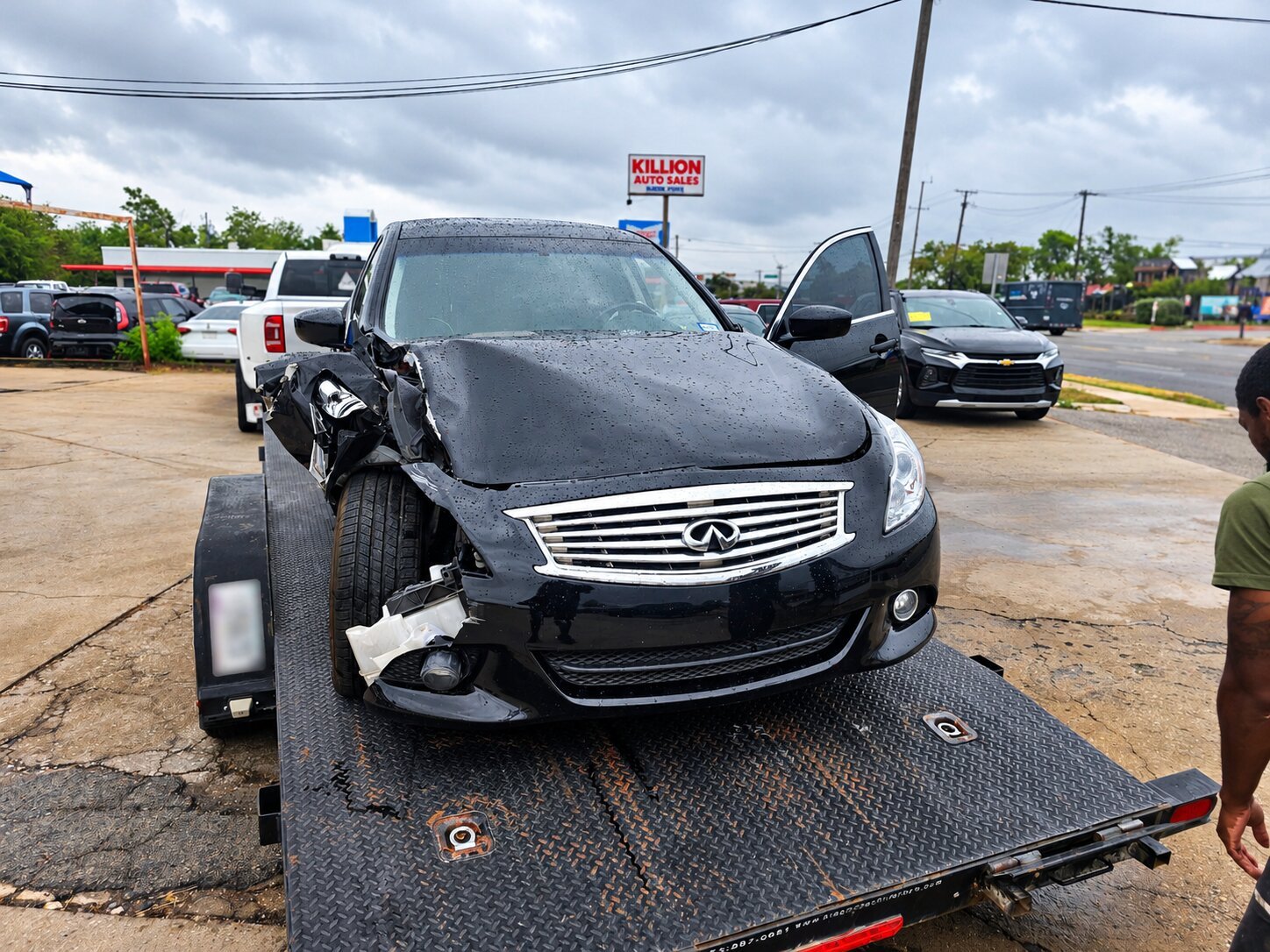
This is the fastest route for a car that doesn’t run. Most buyers will quote you over the phone or online, send a tow truck, and pay on the spot. You don’t repair anything, and you don’t clean the car.
Best for: Non-running cars, people who want it gone this week.
Option B: Online car-buying services
National platforms will give you an instant offer based on your VIN and a few photos, then schedule pickup. Convenient and good for comparing against local quotes.
Best for: Sellers who want a guaranteed offer without making calls.
Option C: Private buyer (Facebook Marketplace, Craigslist)
If the car still runs, or has desirable parts, a private sale usually pays the most. Hobbyists and DIY mechanics buy project cars all the time. The trade-off is time, no-shows, and scammers, so meet in a public place, verify payment before handing over the keys, and never sign over a title without getting paid.
Best for: Cars that run, rare models, and patient sellers.
Option D: Donate it
If your car is worth less than a few hundred dollars, donating to a charity can make sense and may come with a tax deduction. Talk to a tax professional about how that works for your situation.
Best for: Very low-value cars when you’d rather give back than haggle.
Step 4: Get At Least Three Quotes
This is where most people leave money on the table. Quotes for the same car can vary by hundreds of dollars from one buyer to the next.
When you call or fill out a form, have this ready:
- Year, make, and model
- VIN
- Mileage (a rough guess is fine)
- Whether it runs and what’s wrong with it
- Whether the catalytic converter, battery, wheels, and engine are still on the car
- Where the car is parked (driveway, garage, apartment lot)
Be honest about the condition. If you misrepresent the car, the buyer will adjust the price when the tow driver shows up, and that’s the #1 complaint people have with junk car buyers.
Step 5: Watch Out for Common Junk Car Scams
Most Austin buyers are legit, but a few bad apples give the industry a rough name. Red flags:
- The price drops when the tow truck arrives. The driver suddenly finds “problems” that weren’t in the quote.
- Surprise towing fees. “Free towing” should mean free. Don’t pay to have your car towed to a junkyard.
- Payment changes at pickup. Check, cash, or digital payment: confirm how you’ll be paid before the truck shows up.
- They want your title before paying you. Don’t sign anything until payment is in your hand.
- No business name, license, or address. Ask for them. Legit buyers have them.
A quick Google search of the company name plus “reviews” takes two minutes and saves a headache.
Step 6: Get the Car Ready (It’s Easier Than You Think)
You don’t need to wash it or vacuum it. Just do this:
- Clean out your stuff. Check the glove box, trunk, under the seats, and the sun visor. Remove toll tags (TxTag, EZ TAG, or others) and any parking permits.
- Remove your license plates. In Texas, the plates belong to you, not the car.
- Take photos. Snap pictures of the car from every angle and the odometer. They protect you if there’s a dispute later.
- Consider selling aftermarket parts separately. A premium stereo, new tires, or a fresh battery can sometimes net more when sold on their own. Just tell your buyer up front what will and won’t be on the car.
Step 7: Complete the Paperwork the Texas Way
This is the part people dread, but it’s short.
1. Sign the title. Fill out the back of the title with the sale price, odometer reading, and date of sale. Both you and the buyer sign.
2. Complete your portion of Form 130-U. This is the Application for Texas Title and/or Registration. As the seller, you fill out your section; the buyer handles the rest.
3. Get a bill of sale or junk receipt. Texas doesn’t always require one for a private sale, but it’s smart protection. Include the date, vehicle details, price, and both signatures.
4. Take your plates off. Yes, again. Don’t let the car leave with them.
5. File the Vehicle Transfer Notification (Form VTR-346). You can do this online through the TxDMV website in a few minutes. You’ll need the buyer’s info and the VIN. Filing it tells the state you no longer own the car, which protects you from tickets, tolls, and other liability that could otherwise land on you after the sale.
6. Cancel or adjust your insurance. Once the car is gone and the paperwork is filed, call your insurer.
Can You Sell a Junk Car Without a Title in Texas?
In most cases, no. A valid Texas title is the standard proof of ownership, and legitimate buyers will ask for it. If yours is missing, get a certified copy through Form VTR-34 first. Be cautious about anyone who says they’ll buy your car without any paperwork, since that can be a sign of a shady operation.
How Much Should You Expect to Get?
Here’s a realistic snapshot for a 2026 sale:
| Situation | Typical payout |
|---|---|
| Small non-running sedan, scrap value | Roughly $200 to $500 |
| Mid-size car or SUV with a good catalytic converter | Roughly $400 to $900 |
| Truck, large SUV, or hybrid with valuable parts | $800 to $1,500 or more |
| Running car sold privately | Often higher than any junkyard offer |
These are ballpark ranges, not guarantees. Your actual offer depends on weight, location, current scrap prices, and what’s still attached to the car.
Tips to Get the Most Money
- Keep the catalytic converter on the car unless you plan to sell it separately and legally.
- Get multiple quotes and ask each buyer whether the price includes towing.
- Call during the week. Many yards can pick up faster, and you won’t be fighting weekend demand.
- Don’t strip the car halfway. Missing major parts usually lowers the offer by more than the parts are worth.
- Be upfront about the condition. An honest quote is the one that sticks.
Frequently Asked Questions
How do I sell a junk car in Austin?
Gather your title and ID, get quotes from at least three buyers, choose the best offer, sign over the title, remove your plates, and file Form VTR-346 with the TxDMV. Most Austin buyers offer free towing and same-day or next-day pickup.
How much is a junk car worth in Texas?
Most junk cars sell for roughly $200 to $1,500 in 2026, depending on the vehicle’s weight, condition, make, and catalytic converter. Trucks and hybrids can bring more.
Do I need a title to sell a junk car in Texas?
Generally yes. Texas requires the title in your name. If you lost it, request a certified copy with Form VTR-34 from the TxDMV or your county tax office.
Can I sell a junk car that doesn’t run?
Yes. Junk car buyers and salvage yards buy non-running, wrecked, flood-damaged, and high-mileage cars every day, and they typically tow them for free.
What do I do with my license plates after selling a car in Texas?
Remove them. In Texas, plates stay with the seller. You can transfer them to another vehicle you own, return them to the TxDMV, or destroy them if you won’t use them again.
Do I have to pay for towing?
No. Most reputable junk car buyers in Austin include towing at no charge. If a buyer tries to add a towing fee at pickup, that’s a red flag.
How fast can I get paid?
Often the same day the car is picked up. Confirm the payment method before the tow truck arrives.
Should I sell my junk car privately or to a junkyard?
If the car runs or has desirable parts, a private sale often pays more. If it doesn’t run and you want it gone quickly, a local junk car buyer is usually the easiest option.
What if the buyer lowers their offer at pickup?
You don’t have to accept. Politely decline, and call the next buyer on your list. This is why it helps to have three quotes in your back pocket.
The Bottom Line
Selling a junk car in Austin doesn’t have to be a headache. Find your title, compare your options, watch out for red flags, and complete the required Texas paperwork, including signing the title, removing the license plates, and filing a Vehicle Transfer Notification.
Ready to turn that unwanted car into cash? Ibra Auto Junk Cars for Cash buys junk, wrecked, and non-running cars with fair cash offers, free towing, and convenient pickup.
Contact Ibra Auto Junk Cars for Cash today to get an offer for your vehicle!